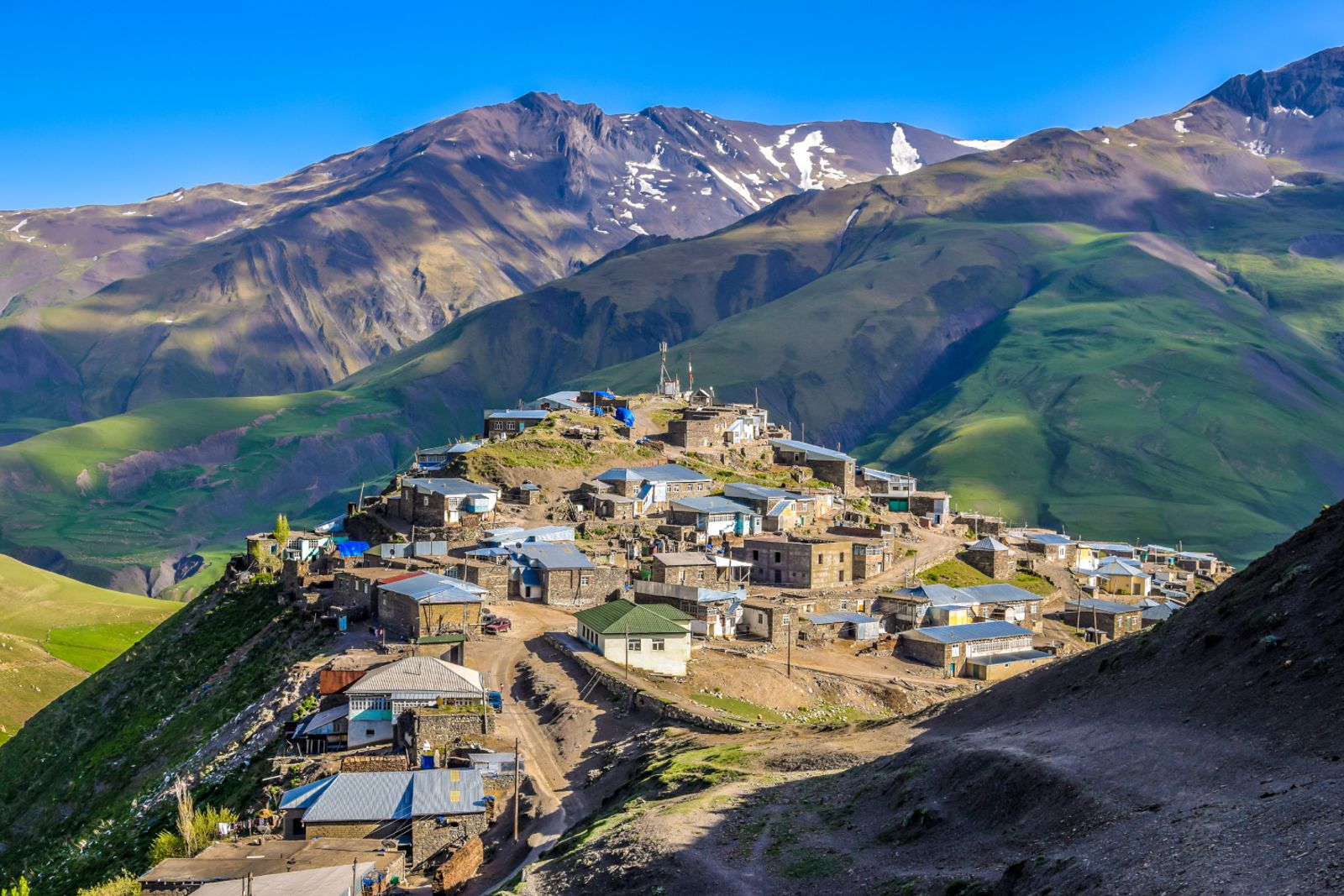
Khinalug (Xınalıq; Kətş in the local language) is a stone village high in the Greater Caucasus, about 2,200 m above sea level and 60 km by mountain road from Quba in northern Azerbaijan. It is the highest and most remote village in the country, and one of the oldest lived-in places in the Caucasus: archaeologists have found traces of settlement here from the Early Bronze Age, around 5,000 years ago.
The people of Khinalug call themselves Kattid, “our own people”, and speak Khinalug, a language heard nowhere else in the world. Linguists class it as an isolate within the Northeast Caucasian family. They are thought to descend from one of the 26 tribes of Caucasian Albania that the Greek geographer Strabo wrote about. Most villagers also speak Azerbaijani.
Life here is shaped by the climate. Traditional houses have no furniture: people sit on the floor on cushions, mattresses and carpets. Stacks of dried manure bricks are kept for winter fuel, and families knit thick, brightly patterned wool socks for winters that can drop to −25 °C.
Khinalug is still semi-nomadic. Every spring and autumn most families drive their sheep along the Köç Yolu, a 200 km migration route between the summer pastures around the village and winter pastures in the lowlands, about two weeks each way. In 2023 the village and the route were added to the UNESCO World Heritage List as the Cultural Landscape of Khinalig People and “Köç Yolu” Transhumance Route.
Give it at least one night. The village museum, the old mosques and shrines, and short walks to the fire temple and the Forty Ascetics cave fill a day. Longer trails start from here too, towards the neighbouring village of Galaykhudat and the high peaks of Bazarduzu (4,466 m), Shahdag and Tufandag.
Good to know
- Getting there: drive or take a bus from Baku to Quba (167 km, under 3 hours by car), then a taxi for the last 60 km up the mountain road, about 1.5 hours. No regular bus runs all the way to the village, so agree the fare before you set off.
- Stay in one of the family guesthouses or homestays in Khinalug or nearby Laza. The reserve's website lists them with phone numbers.
- Bring cash in manat: cards are rarely accepted. Mobile signal and internet work, but coverage depends on the provider.
- Khinalug is a conservative Sunni Muslim village. Dress modestly, and ask before you photograph people.
- June to September is the easiest time for the road and the trails, and mid to late May is best for birdwatching. From December to March the village is snowy and very cold. Pack warm layers even in summer.
- Hikes to the high peaks near the Russian border may need a permit. Arrange them through a local guide.
- August is honey season. Try the mountain honey and govut, a local halva-like sweet.