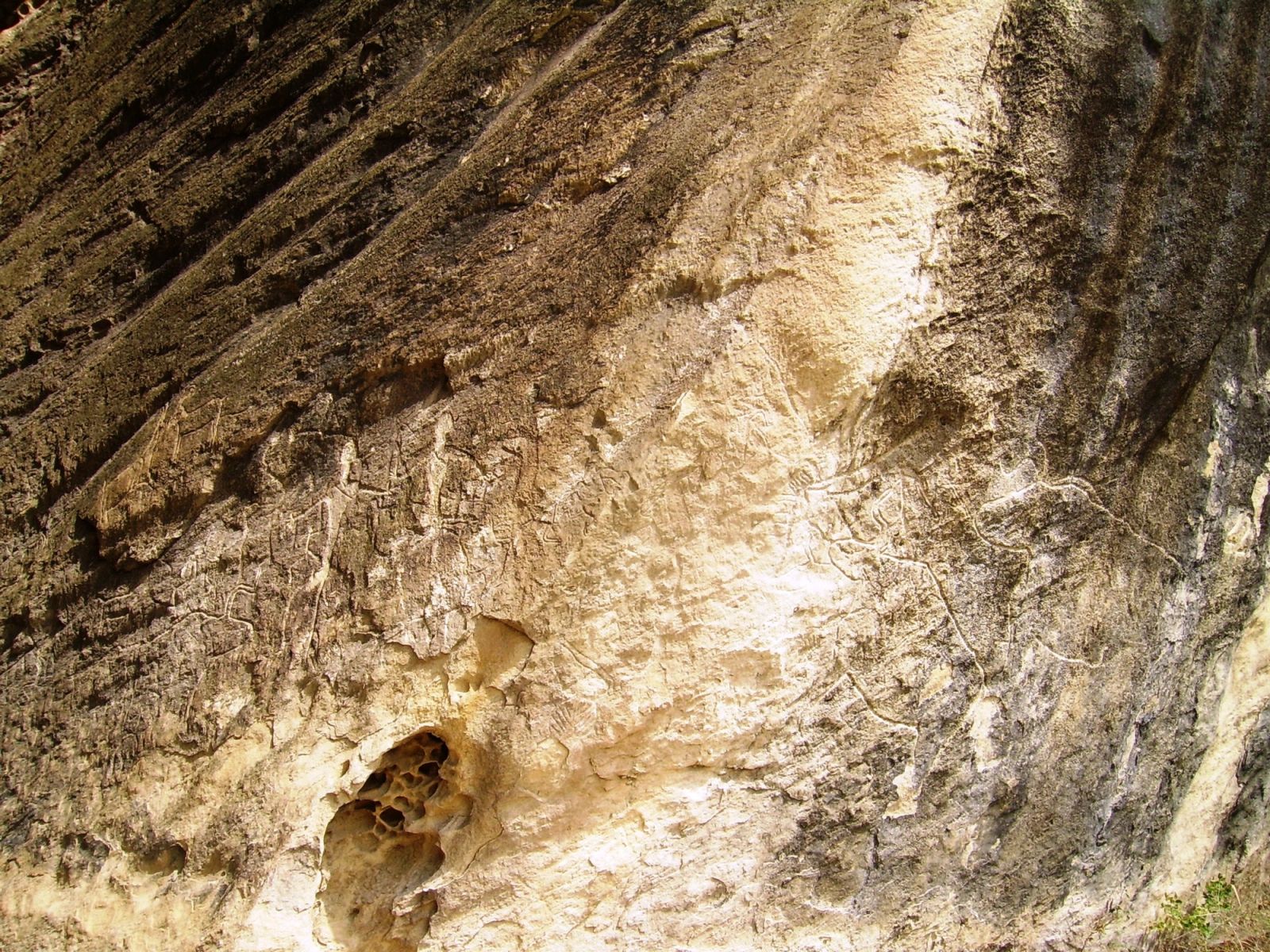
Gobustan (Qobustan) is a rocky plateau in the semi-desert about 60 km south-west of Baku, near the Caspian shore, where people carved more than 6,000 pictures into the stone over tens of thousands of years. Since 2007 it has been a UNESCO World Heritage Site, the Gobustan Rock Art Cultural Landscape, covering 537 hectares across three hills: Boyukdash, Kichikdash and Jingirdag.
The land looked very different then. After the last Ice Age the climate here was warmer and wetter, the Caspian reached closer to the hills, and people lived in the rock shelters and caves, hunting, fishing and holding rituals. The carvings record that world. The oldest show aurochs and wild horses; as the climate changed, deer, boar and birds take over. There are hunters with bows, dancers holding hands in a chain, women, and long boats carrying dozens of people. Later come domesticated animals, and in the Middle Ages camel caravans, horsemen and inscriptions in Arabic and Persian.
Two finds stand out. At the foot of Boyukdash is a Latin inscription left by a centurion of the Roman Legio XII Fulminata in the reign of Emperor Domitian (81–96 AD), evidence that the legion reached the Caspian shore. Near the entrance is the Gaval Dash, the “tambourine stone”, a two-metre slab that rings like a drum when you strike it with a small stone. Visitors can still play it.
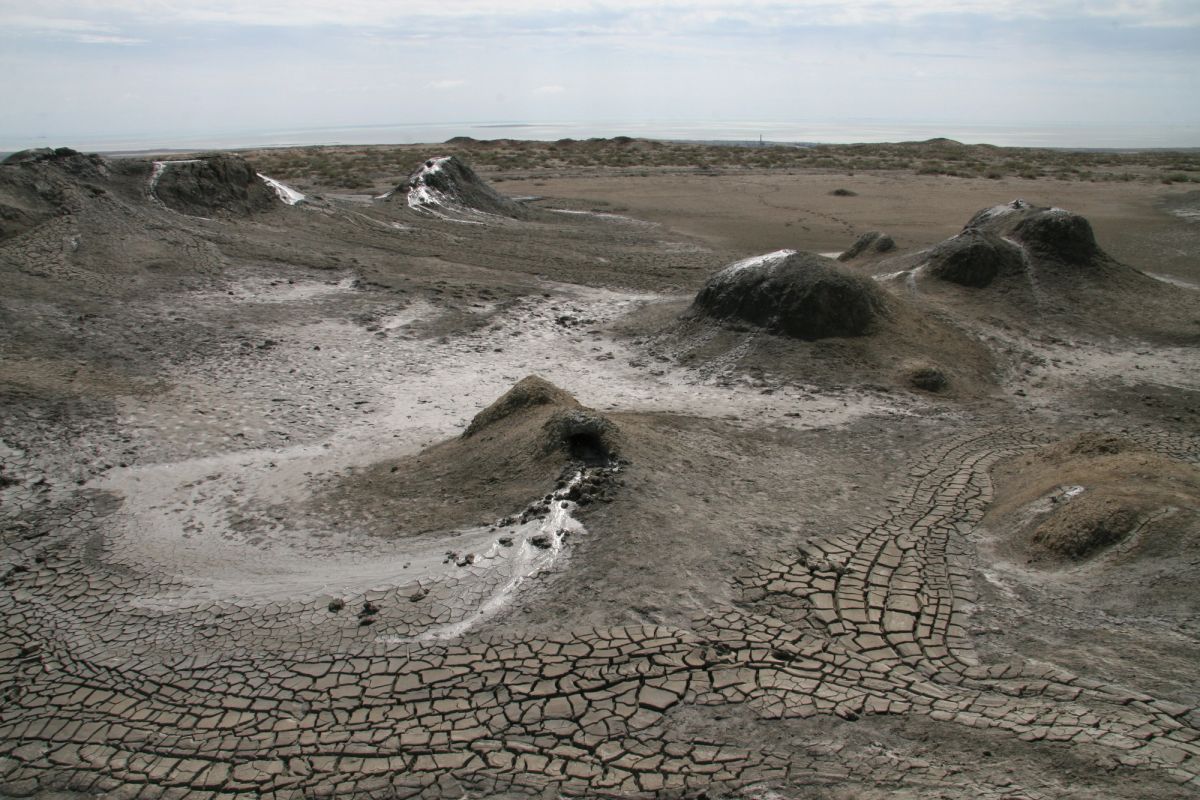
Quarry workers came across the carvings in the 1930s, and the archaeologist Ishag Jafarzadeh began studying them in 1939. Start at the modern museum at the foot of the hill, which explains the carvings, the people who made them and how they were found. Then walk the trail among the boulders of Boyukdash, where most visitors see the carvings. The mud volcanoes are close by, and most trips combine the two.
Good to know
- Usually open every day, 10:00–17:00. Hours change from time to time, so check before you go.
- Tickets are about 15 ₼ for foreign adults, less for children and students. Buy them at the gate or on iTicket.az.
- The museum and the rock art trail are separate stops a short drive apart. Allow 2–3 hours for both.
- It's about an hour's drive from Baku. Public transport means changing buses and finishing by taxi, so most people take a taxi or a tour, usually with the mud volcanoes.
- There is almost no shade on the trail. In summer go early and bring water, a hat and sunscreen; spring and autumn are the most comfortable seasons.
- Wear shoes with good grip: the path climbs over uneven rock and steps.
- Don't touch or climb on the carved rocks. The Gaval Dash is the one stone meant to be played.