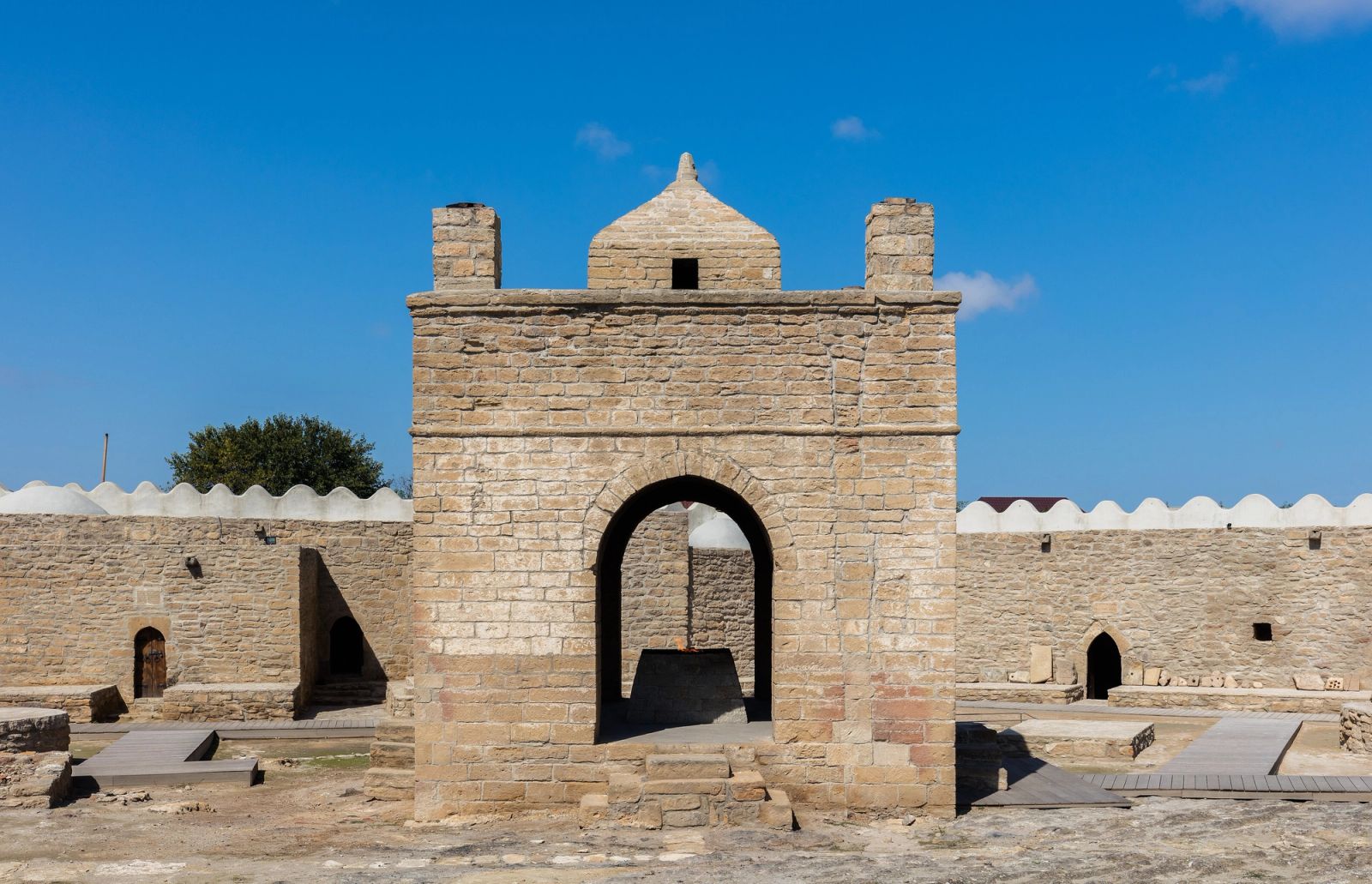
The Ateshgah of Baku (Atəşgah), the Fire Temple, is a historic temple and museum in Surakhani, on the Absheron peninsula about 30 km from central Baku. It was built over a spot where natural gas seeped out of the ground and burned on its own, the kind of place that gave Azerbaijan its name, the Land of Fire.
The complex you see today dates from the 17th and 18th centuries. It was built by Hindu and Sikh merchants and pilgrims from India who travelled the trade routes to the Caspian: a five-sided courtyard, like a caravanserai, lined with small cells where pilgrims and ascetics lived, around a central altar with fire burning at its corners. Stone inscriptions over the doors are in Sanskrit and Punjabi, along with one in Persian.
Gas extraction around Baku drained the underground source, and the natural flame went out in 1969. The fire burning today is fed from the city's gas supply. The cells now hold a museum on the temple's history and the pilgrims who lived here.
Good to know
- Combined tickets with Yanar Dag are sold, and usually cost less than buying both separately.
- Taxis from the centre take about 30–40 minutes; most fire tours visit Ateshgah and Yanar Dag together.
- Guided tours in English are available at the entrance for an extra fee.
- Opening hours and ticket prices change, so check before you go.